
➚MENU
GENESIS TERMITE & PEST CONTROL
We treat every home like it's grandma's.

Termites and Other Wood Destroying Insects(WDI)- Termite treatment Lancaster County
TERMITES

Why Termite Control Matters:
-
Termites are one of the few pests that can genuinely threaten your home itself - not just your comfort. And because they work quietly, out of sight, most of the damage is done long before anyone notices. Here's what makes them worth taking seriously:
-
They eat wood from the inside out. Subterranean termites follow the grain and hollow out framing, sills, subfloors, and support beams, leaving just a thin shell on the surface. By the time it's visible, the damage is often already extensive.
-
They never stop. A single colony can number in the hundreds of thousands and works around the clock, year round. Because they stay hidden inside walls and below ground, homeowners rarely catch them early on their own.
-
The repairs are costly - and usually not covered. Termite damage typically isn't covered by homeowners insurance, and structural repairs can run well into the thousands. That's far more than what it costs to prevent them or stay ahead with a monitoring plan.
-
They're drawn to moisture. Termites love damp wood and any spot where soil meets wood, so they often show up alongside existing moisture and rot problems - around foundations, crawlspaces, and porches - and make them worse.
-
The good news: termites are very manageable when you stay ahead of them. Regular monitoring and early treatment protect the home you've worked hard to build, and cost a small fraction of what it takes to repair the damage after the fact.

Termite Damages & Risks:
-
Structural damage - hollowed out framing, sills, subfloors, and support beams, often extensive before it's ever visible
-
Hidden and fast-moving - colonies work 24/7, year-round, staying tucked inside walls and below ground
-
Expensive repairs - structural fixes run into the thousands and typically aren't covered by homeowners insurance
-
Moisture problems worsen - termites are drawn to damp wood and soil to wood contact, adding to existing rot around foundations, crawlspaces, and porches
-
Lost home value - a history of untreated termite damage can complicate a future sale or inspection
What to Look For:
-
Mud tubes - pencil-width tunnels of dried dirt running up foundation walls, piers, or crawlspace surfaces
-
Hollow or papery wood - wood that sounds empty when tapped, or gives way easily under light pressure
-
Discarded wings - small piles of shed wings near windowsills or doors, often the first sign after a swarm
-
Swarmers - winged termites appearing indoors, especially in spring; a strong sign of an active nearby colony
-
Bubbling or uneven paint - surfaces that look warped or blistered, sometimes mistaken for water damage
-
Frass - tiny wood-colored pellets (a sign specific to drywood termites) collecting below infested wood

Why DIY doesn't work:
-
The colony is the real target. Sprays and foams from the hardware store kill the termites you can see, but the colony - often hundreds of thousands strong and nested below ground - keeps right on working. Knock out a few and the rest carry on unnoticed.
-
The damage is hidden. Termites work inside walls and beneath floors, so it's nearly impossible to know how far they've spread without knowing where and how to look. Treating the wrong spot leaves the real problem untouched.
-
The products aren't the same. Professional treatments use materials and application methods that reach the colony at its source and create lasting protection - something the consumer versions simply aren't built to do.
-
Early mistakes get expensive. The most costly termite cases we see often started as small ones that were treated halfway, giving the colony months or years to keep feeding while everyone assumed it was handled.
-
The bottom line: with most pests, a DIY first swing is perfectly reasonable. With termites, the stakes are your home's structure - and that's a case where getting it right the first time is well worth it.
Other Wood Destroying Insects
Carpenter Ants

Carpenter Ant Damages & Risks:
-
Structural damage over time - they tunnel through framing, beams, and trim to nest, weakening wood as galleries grow
-
They don't eat the wood - unlike termites, they excavate it to nest, so damage builds more slowly but can still be serious if left for years
-
They target damp, weakened wood moisture damaged framing around roofs, windows, decks, and plumbing is prime real estate
-
A sign of a bigger issue - because they favor damp wood, an infestation often points to a hidden moisture or leak problem nearby
-
Satellite nests spread the problem - a single colony can branch into multiple nests throughout a home, indoors and out
What to Look For:
-
Large ants indoors - noticeably big black (sometimes reddish) ants, especially in kitchens, bathrooms, or near windows
-
Frass - small piles of what looks like sawdust, often mixed with insect parts, beneath wood they're nesting in
-
Faint rustling - a soft crinkling sound inside walls or woodwork from an active nest
-
Winged swarmers - flying ants indoors, particularly in spring, signaling a mature colony nearby
-
Ant trails - steady lines of ants along baseboards, counters, or the foundation, often leading to a moisture source
-
Damaged or hollow wood - smooth, clean galleries inside the wood (unlike the mud-packed tunnels of termites)
Why DIY Doesn't Work:
-
You're killing foragers, not the colony. The ants you see are workers out looking for food; the nest - with the queen - stays hidden in the wood or wall. Spraying the visible ants does nothing to the colony that keeps producing more.
-
Satellite nests survive. Carpenter ants often set up multiple connected nests in a single home. Even if you find and treat one, the others carry on, which is why DIY fixes so often seem to "work" for a week and then come right back.
-
The moisture problem stays. Because these ants seek out damp, compromised wood, treating the ants without addressing the underlying moisture just invites them back. Finding and fixing that source is half the battle - and easy to overlook.
-
Baiting the wrong way backfires. Carpenter ants are pickier than other ants, and the wrong bait (or the wrong placement) gets ignored entirely. Professional treatment targets the actual nest and uses methods matched to how these ants behave.
CARPENTER BEES
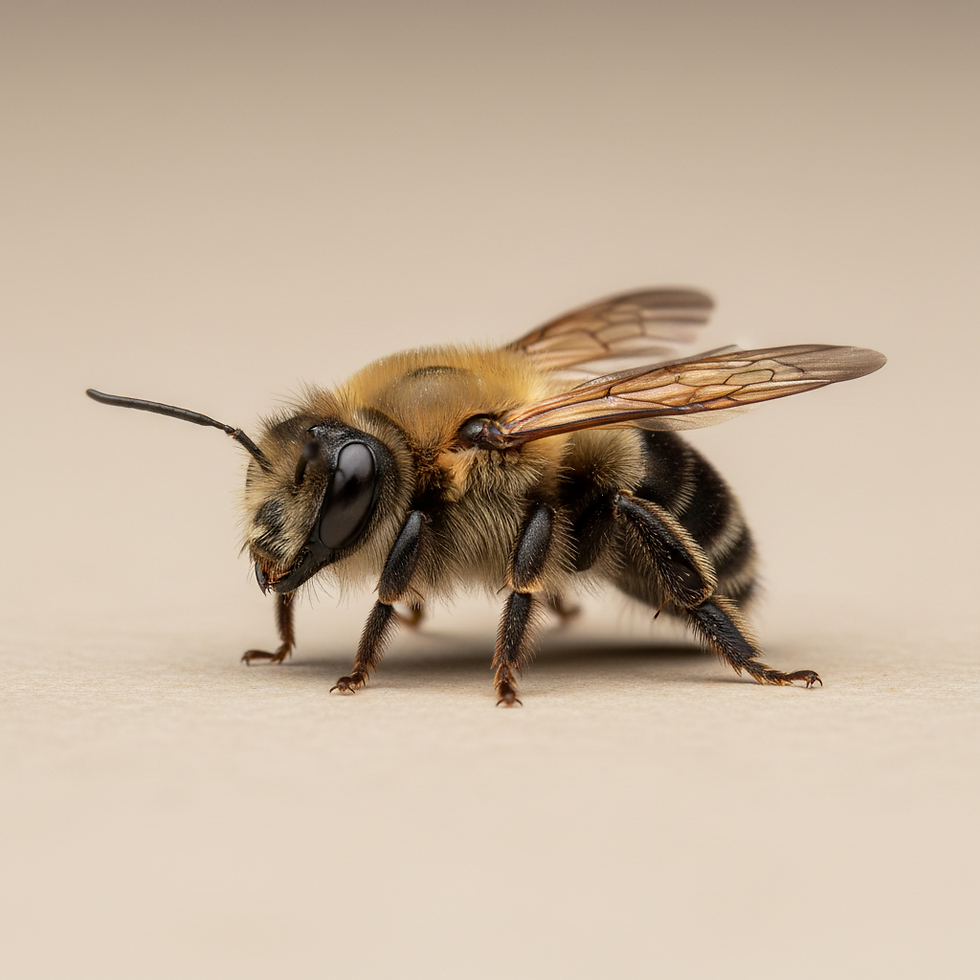
Carpenter Bee Damages & Risks:
-
Surface wood damage - they bore near-perfect round holes (about a half-inch wide) into eaves, fascia, decks, railings, and trim
-
Damage compounds over years - the same nest tunnels get reused and extended each season, so a small hole can grow into a network over time
-
Weakened wood - extensive tunneling can compromise softer wood like railings and trim, though it's rarely a whole structure threat the way termites are
-
Woodpecker damage - birds hunting the larvae will peck the tunnels wide open, often causing more visible damage than the bees themselves
-
Staining - tunnels can leave dark streaks below the holes from waste, marking siding and trim
What to Look For:
-
Round entry holes - clean, perfectly round holes about a half-inch across, often on the underside of eaves, railings, or decks
-
Sawdust - coarse wood shavings on the ground or surfaces directly below the holes
-
Hovering bees - large bees that look like bumblebees, often seen hovering near eaves or darting at anyone who comes close (that's the harmless male being territorial)
-
Staining below holes - yellowish or dark streaks running down from the entry points
-
Buzzing in the wood - a faint sound of activity inside affected trim or railings
-
Returning activity in spring - the same spots coming alive again each year, a sign the tunnels are being reused
Why DIY Doesn't Work:
-
Plugging the hole traps the problem. A common mistake is sealing a hole right away, which traps larvae inside to tunnel out through fresh wood, or leaves the tunnel ready for next year. Timing and treating before sealing is what actually matters.
-
The tunnels go deeper than they look. A hole may be a half inch wide, but the tunnel behind it can branch a foot or more into the wood. Surface sprays don't reach where the larvae are developing.
-
They come back to the same wood. Carpenter bees return to reuse old tunnels season after season. Without treating and protecting those spots properly, this year's fix becomes next year's problem all over again.
-
Height and access make it tricky. The prime nesting spots - high eaves, second story fascia, peak trim - are exactly the places that are hard and unsafe to reach and treat thoroughly from a ladder.
-
The bottom line: carpenter bees are manageable, but the trick is treating the tunnels at the right time and protecting the wood so they don't just return next spring. That's where knowing their habits makes the difference.
POWDER POST BEETLE

Powder Post Beetle Damages & Risks:
-
Structural wood damage - their larvae tunnel through and hollow out wood over time, weakening floors, joists, beams, trim, and furniture; in our area they're second only to termites for wood damage.
-
Slow, hidden, and long running - larvae feed inside the wood for months to years before adults emerge, so damage often advances unseen until exit holes appear.
-
Re-infestation cycle - emerging adults lay eggs in the same or nearby wood, so an untreated infestation compounds year after year.
-
Damage to valuables - beyond structure, they attack hardwood furniture, antiques, flooring, cabinetry, and barn/outbuilding timbers.
-
No risk to people or pets - powder post beetles don't bite, sting, or spread disease; the threat is entirely to the wood, not your health.
-
A serious homeowner concern - because the damage is structural and progressive, it can affect a home's integrity and value if left unchecked.
What to Look For:
-
Tiny round exit holes — small, clean "shot holes" about 1/32 to 1/16 inch across in wood surfaces, hardwood floors, trim, furniture, beams, and paneling; often the first thing noticed.
-
Fine, powdery dust ("frass") — flour-like sawdust sifting out of the holes or collecting in little piles below infested wood; a key giveaway that the infestation is active.
-
The beetles themselves — small (about 1/8 inch or less), reddish-brown to black, elongated beetles, sometimes seen near windows or emerging from wood in spring and summer.
-
Damage in bare, unfinished wood — they favor untreated or unsealed hardwoods, so check crawlspaces, subfloors, joists, barn beams, and the undersides of furniture.
-
Powder that's fresh and pale — new, light-colored frass signals an active, ongoing infestation, versus old holes with no dust.
Why DIY Doesn't Work:
-
The damage hides inside the wood. The larvae that do the destroying live deep inside the wood for months or years - surface sprays never reach them.
-
By the time you see it, it's established. Those little "shot holes" and the flour-like powder only appear when adults chew out, so the infestation has been working a long time already.
-
Active vs. old damage is hard to tell apart. Exit holes stay forever. Homeowners often treat dead infestations - or miss live ones - without a trained eye.
-
Treatment depends on the species. Different powderpost beetles infest different woods and conditions. The wrong product is wasted money.
-
Store products can't do the job. Effective control usually needs professional-grade borates on bare wood - and severe cases require fumigation you can't buy retail.
-
Moisture is the root cause. These beetles love damp wood. Fix the moisture or they come right back.
-
Miss one board and it spreads. A single untreated spot re-infests the whole area. Only full inspection and treatment breaks the cycle.
-
The stakes are structural. Second only to termites for wood damage - a missed infestation can quietly weaken your framing and floors.
TERMITE & WDI FAQs
What are the signs of termites?
The most reliable sign is mud tubes, pencil width dirt tunnels running up foundation walls, piers, or crawlspace surfaces. Other red flags include swarmers (winged termites that emerge in spring, often after warm rain) and small piles of discarded, equal length wings near windows and doors. Inside, watch for wood that sounds hollow or papery when tapped, soft floors or trim, bubbling or damaged paint, and doors or windows that suddenly stick. Because termites work silently for months, catching these signs early makes a big difference. If you spot any, contact us for your free inspection.
How much does termite treatment cost?
It depends on your home's size and the severity of the infestation, so we always give you an exact quote after inspecting, never a guess over the phone. To help you plan, our termite treatments start at $600 for bait stations and $900 for a full barrier treatment. Your termite inspection is free, and every treatment is backed by a 1-year guarantee. If termites come back within a year, so do we, at no charge. After that, an affordable annual renewal keeps your protection going year after year. Contact us today to schedule your free inspection and get an honest quote.
Are termites covered by homeowners insurance?
Usually not. Most homeowners insurance policies exclude termite damage because it's considered preventable through routine maintenance, not a sudden, accidental event like a fire or storm. Insurers view slow, ongoing damage as the homeowner's responsibility, so the repair costs typically fall on you. That's exactly why prevention pays off: regular termite inspections and treatment cost far less than repairing structural damage out of pocket. Policies do vary, so it's always worth checking yours, and worth protecting your home before termites ever get the chance. Contact us for your free termite inspection today.
Does my stone or brick home need termite protection?
Yes. It's a common myth that stone and brick homes are safe from termites, but the exterior material doesn't matter, termites are after the wood inside. Nearly every home has wood framing, floor joists, sub-flooring, and trim behind those brick and stone walls, and termites can reach it through tiny foundation cracks and gaps. In fact, the solid exterior can make an infestation harder to spot until real damage is done. No matter what your home is made of, regular inspections and protection are the smart move. Contact us for your free termite inspection today.
Do I need a termite inspection to buy or sell a house?
Often, yes. Many mortgage lenders, especially for FHA and VA loans, require a wood-destroying insect (WDI) inspection before closing, and buyers frequently request one even when it's not mandatory. It's worth knowing a WDI inspection is different from a standard termite inspection: it's a formal, documented inspection for real estate transactions, and we provide the official signed forms lenders and buyers need at closing. Because of the added documentation and reporting, WDI inspections start at $175. For sellers, having one done early prevents last minute surprises that can delay a sale; for buyers, it's cheap peace of mind against inheriting a costly hidden problem. We provide WDI inspections across Lancaster County and the surrounding counties. Call us to schedule yours.
Do you do WDI (wood destroying insect) inspections?
Yes! We provide official wood-destroying insect (WDI) inspections for real estate transactions across Lancaster County and the surrounding area. A WDI inspection is different from a standard termite inspection, as it's a formal, documented evaluation that checks for termites and other wood destroying insects, and we provide the signed forms that lenders, buyers, and sellers need at closing. WDI inspections start at $175. Whether you're buying, selling, or refinancing, we'll get you a clear, professional report on your timeline. Contact us to schedule yours.
Are carpenter ants as bad as termites?
Not quite, but they're not harmless either. Unlike termites, carpenter ants don't eat wood, they excavate it to build their nests, so the damage tends to build more slowly. But left alone for years, that tunneling can still weaken framing, beams, and trim. And because carpenter ants are drawn to damp, compromised wood, an infestation often points to a hidden moisture or leak problem that needs attention too. Either way, they're worth taking seriously, and we can tell you exactly what you're dealing with. Contact us for an inspection.
How do I know if I have carpenter ants or termites?
The easiest tell is the ants themselves: carpenter ants are large, usually black (sometimes reddish), and you'll often see them indoors near kitchens, bathrooms, or windows. Termites are smaller and stay hidden. Carpenter ants also leave behind frass that looks like sawdust mixed with insect parts, and their galleries inside the wood are smooth and clean, unlike the mud packed tunnels termites make. If you're seeing winged swarmers indoors in spring, either pest is possible, so it's worth having it identified. Send us a photo or call for a free inspection.
What are powderpost beetles, and are they dangerous?
Powderpost beetles are small wood-boring beetles whose larvae tunnel through and hollow out wood over months or years. In our area, they're second only to termites for the wood damage they cause, weakening floors, joists, beams, trim, and even furniture and antiques. They don't bite, sting, or spread disease, so there's no risk to people or pets, the threat is entirely to the wood. But because the damage is structural and progressive, an untreated infestation can affect your home's integrity and value over time.
How do I know if I have powderpost beetles?
Look for tiny round exit holes, clean little "shot holes" about 1/32 to 1/16 inch across, in hardwood floors, trim, beams, furniture, and paneling. The key giveaway is fine, flour-like powder (called frass) sifting out of those holes or collecting in small piles below the wood. Fresh, pale-colored powder signals an active infestation, while old holes with no dust are usually from a past one. They favor bare, unfinished hardwood, so check crawlspaces, subfloors, joists, and barn beams. Not sure if it's active? We can tell you for certain.