
➚MENU
GENESIS TERMITE & PEST CONTROL
We treat every home like it's grandma's.
STINGING INSECTS


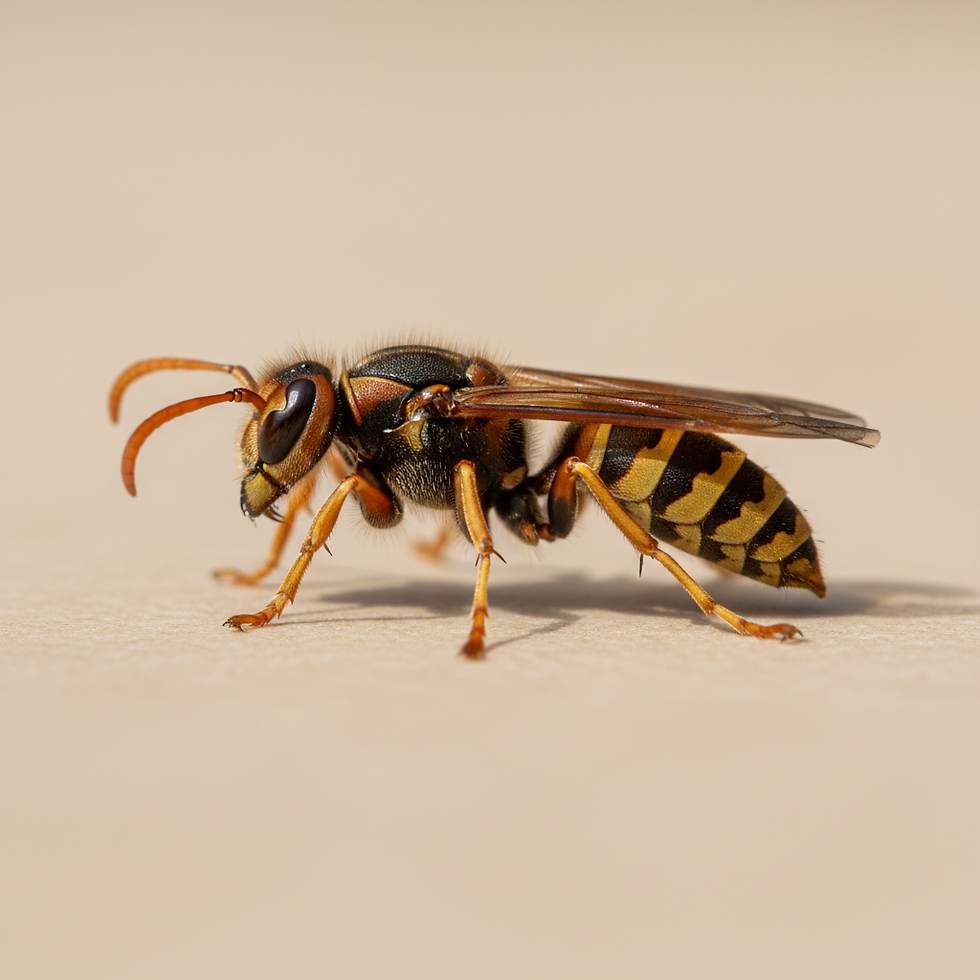


Damages and Risks of Stinging Insects:
-
The danger is the real problem - disturbing a wasp, hornet, or yellow jacket nest can trigger dozens of aggressive, repeated stings, and for anyone allergic that's a medical emergency. This is one job best left to a professional - the risk simply isn't worth it.
-
Store bought sprays often provoke the nest - a can that doesn't reach or kill the whole colony can send angry insects pouring out at you instead.
-
You usually can't reach the real nest - nests hide in wall voids, soffits, attics, eaves, and underground, so the part you see is rarely the whole colony.
-
Ground nests are easy to miss and easy to step on - yellow jackets nest in the ground, and mowing or walking over one sets off a swarm.
-
Knocking down a nest doesn't end it - survivors often rebuild nearby, and a partially treated nest can come right back.
-
Timing and the right protective gear matter - professionals treat at the safest time of day, in proper protective equipment, and make sure the entire colony is eliminated, not just the visible insects.
-
Some are easy to misidentify - bald-faced hornets, paper wasps, and yellow jackets each nest and behave differently, and treating the wrong way can make it worse (while honeybees should be protected, not killed).
What to Look For:
-
Paper nests under eaves and overhangs. Open, umbrella shaped combs on stalks (paper wasps) tucked under eaves, porch ceilings, and door frames.
-
Enclosed gray "paper" nests. Football or teardrop shaped nests wrapped in a papery gray shell, hanging in trees, shrubs, or under eaves (bald-faced hornets).
-
Ground holes with heavy traffic. Yellowjackets often nest underground, so watch for a steady stream of insects going in and out of a hole in the lawn, at the base of a wall, or under a step.
-
Nests in wall voids and cavities. Yellowjackets and European hornets also nest inside wall voids, attics, hollow trees, and utility boxes, with insects funneling in and out of a single gap.
-
Large brown hornets active at night. European hornets are big (up to 1½ inches), brownish, and unusually active after dark, often bumping against lit windows.
-
Big solitary wasps hovering low over the lawn. Cicada killers are very large but far less aggressive, seen skimming low over open turf and digging pencil-sized burrows with small mounds of excavated soil.
-
Increasing activity late summer. Rising numbers of stinging insects around trash cans, recycling, food, and outdoor eating areas, peaking in late summer and early fall when colonies are largest.
Why DIY Doesn't Work:
-
The nest is bigger and deeper than you can see. A wall void or underground yellow-jacket nest can hold thousands of insects. Spraying the entrance hits a fraction of them while the colony keeps working behind the wall or below ground.
-
Store bought sprays provoke the colony. A can of wasp spray that doesn't reach the nest core just agitates the colony, and a defensive nest near a doorway or customer area is far more dangerous than one left undisturbed.
-
Stings are a real safety risk. Yellowjackets and hornets can sting repeatedly, and for anyone with an allergy a single disturbed nest can become a medical emergency. This is not a job to test your luck on from a ladder.
-
European hornets nest where you can't reach. They favor wall voids, attics, and hollow trees, so surface spraying never touches the nest, and their nighttime activity makes DIY attempts even riskier.
-
Ground nests are easy to misjudge. Yellowjacket and cicada killer burrows can have hidden extents and multiple openings, so a quick pour or spray at one hole rarely ends it.
-
The real fix is treating the nest at its source. Lasting control means locating every nest and entry point, treating the colony directly with the right method for the species, and making sure it's fully gone, safely, not just knocking down what's visible.
STINGING INSECT FAQs
When is stinging insect season in Pennsylvania?
Late summer through early fall, roughly August into October, is peak stinging insect season in PA. Colonies that started small in spring reach their largest size by late summer, and as their natural food runs short, wasps, hornets, and yellowjackets get bolder and more aggressive around trash cans, food, and outdoor spaces. That's when nests are biggest and stings are most common. If you're seeing steady wasp traffic around your home this time of year, there's likely a nest nearby. Contact us and we'll find and remove it safely.
How do I get rid of a wasp or hornet nest safely?
Carefully, and usually not on your own. Disturbing a nest can send the whole colony into defense mode, which is how most stings happen, and it's especially dangerous for anyone with an allergy. Store bought sprays often fail to reach the nest core and just agitate the colony. Many nests also hide in wall voids, attics, or underground, so the part you see is rarely the whole thing. We locate the full nest, treat it at the source with the right method for the species, and make sure it's gone. Contact us and we'll handle it, at no risk to you.
How do I know if I have yellowjackets, hornets, or wasps?
Look at the nest. Paper wasps build open, umbrella shaped combs under eaves and railings. Bald-faced hornets build enclosed, gray, football shaped nests in trees or on structures. Yellowjackets usually nest in the ground or in wall voids, so you'll see a steady stream of insects going in and out of a single hole. European hornets are large brown hornets that fly at night and bump against lit windows. Not sure what you have? Send us a photo or give us a call and we'll identify it.
Are cicada killers dangerous?
Not really. Cicada killers are very large wasps that look alarming, but they're solitary rather than colony nesting. The males can't sting at all, and the females rarely do. They dig burrows in bare, sunny soil, leaving small dirt mounds in lawns. They're more of a lawn nuisance than a threat, but if they're tearing up your yard or making you uneasy, we can treat the burrows. Contact us and we'll take a look.
Do you remove honeybees?
No, and this is important: honeybees are vital pollinators, and we don't exterminate them. If it's just a few buzzing around flowers or water, they're foraging and will move on with no treatment needed. If you have an established honeybee colony, the right move is relocation by a beekeeper, not extermination, and we're glad to point you in the right direction. For wasps, hornets, and yellowjackets, though, we're here to help.
How fast can you come out for a stinging insect problem?
Fast. We know a nest near a doorway, walkway, or play area is a real safety risk that can't wait, so we prioritize urgent stinging insect calls. In most cases, if you call before noon, we can be out the same day. Call or text 717-598-3769 and we'll find the soonest time that works.
Stinging insect control Lancaster County. Wasp, Hornet & Yellow Jacket Removal
-
Yellow-jacket - the most aggressive and the biggest problem. They nest in the ground, wall voids, and cavities, grow huge by late summer, and sting repeatedly when disturbed. A hidden nest near a walkway or doorway is a real hazard.
-
Bald faced hornet - build large gray papery nests in trees, shrubs, and on structures. Very defensive of the nest and capable of stinging in numbers if it's disturbed.
-
European hornets - the largest hornet in our area, up to about 1½ inches, brown and yellow, and often alarming simply for their size and loud, low buzz. Unusual among stinging insects for flying at night, they're drawn to lights and will bump against windows after dark. They nest in hollow trees, wall voids, attics, and barns, and while they're not especially aggressive away from the nest, they'll defend it fiercely - and like all hornets, disturbing a colony is a job best left to a professional.
-
Paper wasp - build open, umbrella shaped nests under eaves, railings, and overhangs. Less aggressive than the others, but they'll sting to defend the nest.
-
Cicada killer - mostly a lawn pest. These oversized wasps dig burrows in bare, sunny soil, leaving dirt mounds and loosened turf. They look intimidating, but they're solitary rather than colony nesting - males can't sting and females rarely do.
-
A note on honeybees: we do not exterminate honeybees—they are vital pollinators. If it's just a few buzzing around flowers or a water source, they're simply foraging and will move on with no treatment needed. When it's an established honeybee colony, the right move is relocation by a beekeeper, not extermination.