➚MENU
GENESIS TERMITE & PEST CONTROL
We treat every home like it's grandma's.
COCKROACHES
-
German cockroach - the most common and most stubborn indoor roach. Small and tan with two dark stripes behind the head, it packs into warm, damp kitchens and bathrooms, breeds fast, and can spread germs across food surfaces - making it the hardest roach to control once it takes hold.
-
Oriental cockroach - frequently called the "water bug." Large, shiny, and dark, it favors cool, damp spaces like basements, drains, and crawlspaces, often working its way in from outside. Slow moving and musty smelling, it's a sign of excess moisture and a pest that thrives around decay.
-
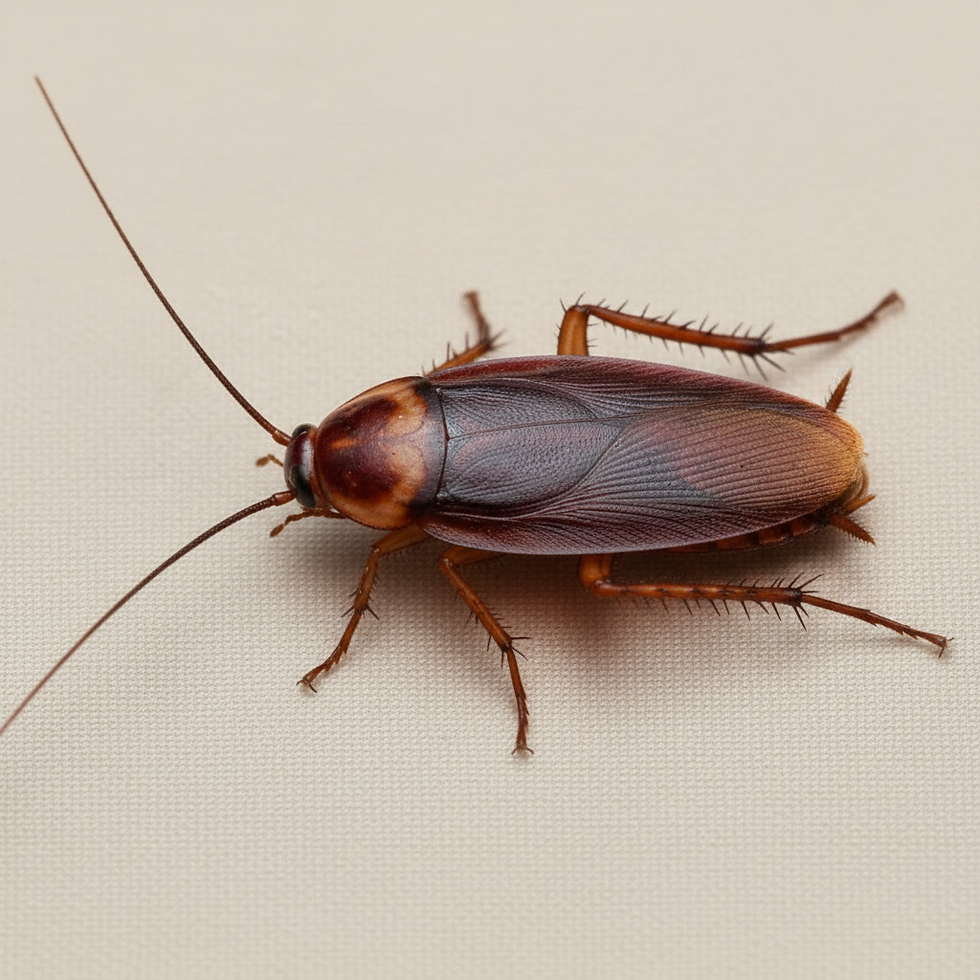
American cockroach - the big reddish-brown roach people call a "water bug." American cockroaches favor warm, damp areas like basements, drains, and boiler rooms, and often signal a moisture problem. They spread bacteria as they travel, so treating the source and entry points matters more than surface spraying.
-
Brown-banded cockroach - the odd one out. Small and brown with two light bands across the back, it prefers warm, dry areas and spreads through the whole house instead of staying near water, turning up in unexpected spots like upper walls, closets, bedrooms, and even electronics.
Damages & Risks of Cockroaches:
-
Disease and contamination. Roaches travel through drains, garbage, and sewers, then across counters, dishes, and prep surfaces, spreading bacteria like salmonella and E. coli wherever they go.
-
Allergies and asthma. Their droppings, shed skins, and saliva are a leading indoor allergen and a common asthma trigger, a real concern for children, staff, and customers alike.
-
Failed inspections and reputation. For any business, live roaches are one of the fastest ways to fail a health inspection, and a single sighting by a customer can end up in a review that costs far more than the pests ever would.
-
They multiply fast and hide. German cockroaches breed explosively, producing hundreds of offspring a year, and nest deep in wall voids, behind appliances, and inside equipment, so what you see is a fraction of what's really there.
-
They spread between spaces. Roaches move through walls, pipes, and deliveries, so a problem in one room, unit, or kitchen quickly becomes a whole building one.
What to Look For:
-
Live roaches. Especially ones that scatter when you turn on a light. Daytime sightings often mean a heavy infestation, since roaches are normally nocturnal.
-
Droppings. Tiny black specks like ground pepper or coffee grounds from smaller roaches, or larger dark pellets from bigger species, in cabinets, drawers, and along baseboards.
-
Egg cases. Small brown, capsule-shaped shells (called oothecae) tucked in cabinets, behind appliances, and in crevices.
-
A musty, oily odor. A distinctive smell that builds as the population grows.
-
Smear marks. Dark streaks along surfaces in damp, heavily traveled areas.
-
Hiding spots. Warm, moist, hidden areas, especially behind and under refrigerators, stoves, and sinks, and inside cracks and crevices.
Why DIY Doesn't Work:
-
They breed faster than you can kill them. German roaches reproduce explosively, a single female leads to hundreds more in a matter of months, so store bought sprays can't keep pace with the population hidden out of sight.
-
Sprays scatter them. Over-the-counter foggers and sprays kill a few in the open but drive the rest deeper into walls and crevices, spreading the infestation instead of ending it.
-
They resist common products. German roaches have grown resistant to many retail insecticides, so the bugs you're spraying often just shrug it off.
-
Eggs survive. Egg cases are shielded from sprays, so even a good knockdown lets a fresh generation hatch and rebuild days later.
-
Hidden harborage stays untouched. Roaches nest deep behind appliances, in wall voids, and in cracks that store-bought products never reach.
-
Lasting control means targeted baits roaches carry back to the harborage, treatment that reaches where they actually nest, and follow up to break the breeding cycle - not a spray that scatters them and misses the eggs.
COCKROACH FAQs
How do I know if I have a cockroach problem?
The most common signs are droppings that look like coffee grounds or black pepper in drawers and cabinets, a musty odor as numbers grow, and small brown egg cases tucked into cracks. Since roaches are mostly active at night, spotting even one during the day often means many more are hiding nearby. If you’re seeing any of these, it’s worth having us take a look.
Do cockroaches mean my house is dirty?
Not at all. Cockroaches are after warmth, water, and tiny bits of food, and they can find all three in even the cleanest home. They often hitch a ride in on groceries, boxes, bags, or secondhand items, or move in from a neighboring unit. A spotless kitchen helps, but it’s no guarantee, so please don’t feel embarrassed. What matters is handling it quickly.
Why can’t I get rid of cockroaches with store bought sprays?
Store bought sprays usually kill the few roaches you see while the nest keeps growing out of sight, and they often make things worse by scattering roaches deeper into walls and cabinets. Those products also don’t reach the eggs, which are protected inside their cases, so a new generation hatches days later. Lasting control means treating them at the source and breaking the breeding cycle, which is what we do.
Are cockroaches dangerous or just gross?
Both, unfortunately. Beyond being unpleasant, cockroaches can spread bacteria across food and surfaces as they travel, and their droppings and shed skins are a known trigger for allergies and asthma, especially in kids. That’s a big reason it’s worth treating an infestation promptly rather than living with it.
How long does it take to get rid of cockroaches?
It depends on how established the infestation is. Because German cockroaches breed so quickly and hide so well, tougher cases often take more than one visit to fully clear, timed to interrupt the breeding cycle. You’ll usually see a real drop fast, and our guarantee is there to make sure the job gets finished, not just started.
Cockroach Control Lancaster County