
➚MENU
GENESIS TERMITE & PEST CONTROL
We treat every home like it's grandma's.
ANTS
-
Odorous house ants - the most common nuisance ant. Harmless but persistent, they trail across counters and pantries after sweets and give off a rotten-coconut smell when crushed.
-
Pavement ants - nest under slabs, driveways, and foundations, pushing up small dirt piles at cracks and entering homes to forage.
-
Pharaoh ants - a tougher indoor pest that can spread germs across surfaces, and notoriously hard to control because disturbing them splits the colony.
-
Citronella ants - mostly a harmless nuisance, named for the lemony, citronella like smell they give off when crushed. Large swarms of winged ants emerging indoors (often from basements or around foundations) can be alarming, but they don't damage wood or eat household food - their appearance usually signals moisture and points to where they're getting in.


Damages & Risks of Ants:
-
The main risks: food contamination as ants forage across kitchen surfaces and equipment, and the persistence factor. Ant colonies number in the thousands, so surface sprays kill the few you see while the nest keeps producing more.
What to Look For:
-
Visible trails, especially toward kitchens and water
-
Winged swarmers indoors
-
Dirt or debris pushed up through pavement cracks
-
A steady line of ants along baseboards, counters, or walls
-
Ants clustered around spills, crumbs, or pet food
-
Activity that returns days after you've wiped them away
Why DIY Doesn't Work:
-
You only kill the ants you see. The queen and colony stay hidden, pumping out thousands more.
-
Sprays make it worse. Our most common local ant reacts by splitting into several new nests.
-
Wrong bait gets ignored. Ants switch between sweet and greasy foods, so off-target bait does nothing.
-
The nest is out of reach. Wall voids, under slabs, and outdoor mulch are where the real problem lives.
-
The real fix is identifying the exact species, locating the nest, and using targeted baits the ants carry back to the queen, which is exactly what we do.
CENTIPEDES
Damages & Risks of Centipedes:
-
Mostly a nuisance and a "creep factor" pest - their main impact is startling people; they don't damage your home.
-
Rare, minor bites - larger centipedes can bite if handled, causing brief pain and mild swelling similar to a bee sting, but bites are uncommon and not dangerous to most people.
-
They signal an underlying problem - their real significance is what they point to: excess moisture and a population of other insects they're feeding on.
-
They don't cause structural damage - no chewing of wood, wiring, or insulation.
-
They don't spread disease, contaminate food, or reproduce in large indoor swarms like some pests - you typically see them one at a time.
What to Look For:
-
The centipede itself - flattened, yellowish gray to brown body, with many long legs (the common house centipedede has 15 pairs) and long antennae; house centipedes have distinctly long, banded legs and move fast.
-
Fast, darting movement - they scurry quickly across floors and walls, often at night, and dart for cover when a light comes on.
-
Damp, dark areas - bathrooms, basements, crawlspaces, laundry rooms, under sinks, and floor drains.
-
Sightings near other bugs - because they hunt other insects, seeing them often means there's a food supply (and usually a moisture issue) already present.
-
Entry along the ground - around foundation cracks, door thresholds, and utility line gaps, especially after weather changes.
Why DIY Doesn't Work:
-
Killing the ones you see ignores the cause - centipedes are a symptom; if you don't fix the moisture and the insects they eat, more keep coming.
-
You have to solve the moisture problem - damp basements, crawlspaces, and bathrooms are the real draw, and that's not something a spray fixes.
-
You have to eliminate their food source - they're predators, so lasting control means removing the other pests (silverfish, roaches, ants, spiders) they're hunting.
-
They exploit tiny ground level gaps - sealing the cracks and entry points they use takes knowing where to look.
-
Store-bought sprays are short lived - they may kill a few on contact but do nothing about the conditions bringing them in, so the problem returns.
CLUSTER FLIES
Damages & Risks of Cluster Flies:
-
Sheer numbers. They overwinter by the hundreds or thousands inside wall voids and attics, so a small entry point becomes a big indoor swarm.
-
They keep coming back. Once a building is established as an overwintering site, the same structure attracts them year after year.
-
Staining. Large clusters can leave small dark spots (droppings) on walls, curtains, and windowsills where they gather.
-
They reappear indoors. On warm winter days and again in spring, they emerge inside the living space, showing up at windows and light fixtures just when you thought they were gone.
What to Look For:
-
Large numbers of slow, sluggish flies on sunny exterior walls in fall, usually south and west facing
-
Clusters of flies at windows, in attics, or around light fixtures on warm days in winter or early spring
-
Flies that are noticeably bigger and slower than house flies, dark gray with a faint golden sheen
-
Small dark spots on walls or window frames where they've gathered
-
A faint, sweetish odor in severe attic infestations
Why DIY doesn't Work:
-
The flies you see aren't the problem. By the time they're at the window, hundreds more are tucked inside wall voids and attic spaces you can't reach.
-
Swatting and sprays don't stop the source. Killing the visible flies does nothing about the overwintering mass behind the walls, so they keep filtering back in.
-
Store-bought foggers miss the harborage. The flies hide deep in voids and insulation where consumer products don't penetrate.
-
The real entry points are hidden. They get in through tiny gaps around eaves, soffits, utility lines, and window frames, the kind of openings you'd never spot without knowing where to look.
-
The fix is timing plus exclusion. The real solution is treating harborage areas and sealing entry points before they move in each fall, which takes knowing the seasonal cycle, which is exactly what we do.

Damages & Risks of Earwigs:
-
Mostly a nuisance and "creep factor" pest - the pincers look threatening, but earwigs are largely harmless to people.
-
They don't spread disease or infest food in the way roaches or rodents do.
-
Rare, minor pinch - they can pinch if handled, but it seldom breaks the skin and isn't dangerous or venomous; they do not crawl into ears despite the old myth.
-
No structural damage - they don't chew wood, wiring, or insulation.
-
Minor garden damage - in larger numbers they can chew leaves, flowers, and seedlings, which is a bigger concern for gardeners than for the home itself.
-
The real issue is numbers and moisture - when conditions are right they show up in large groups, and their presence usually signals excess dampness.
-
The reassuring part: earwigs don't burrow into ears, aren't venomous, don't damage your home's structure, and don't spread disease. They're startling to find, but the problem is nuisance and moisture - both very manageable.
What to Look For:
-
The earwig itself - about ½ to ¾ inch, reddish-brown and elongated, with a set of curved pincers (forceps) at the rear end; that's the giveaway.
-
Nighttime activity - they hide during the day and come out at night, so you'll often spot them when you turn on a light.
-
Damp, dark hiding spots - bathrooms, basements, crawlspaces, laundry rooms, under sinks, and in floor drains.
-
Outdoor clusters near the foundation - under mulch, leaf litter, woodpiles, flowerpots, stones, and door thresholds, especially in warm, dry stretches when they move toward moisture.
-
Sudden indoor appearances - they push inside through ground-level cracks and gaps, often after heavy rain or drought drives them to seek shelter.
-
Chewed plant leaves - ragged holes in garden plants, flowers, and seedlings can point to earwigs feeding at night.
Why DIY Doesn't Work:
-
Killing the ones you see ignores the cause - earwigs are drawn in by moisture and shelter; without fixing that, more keep coming.
-
You have to address the moisture - damp basements, crawlspaces, mulch beds, and clogged gutters are the real draw, and a spray doesn't solve that.
-
They live and breed outdoors - the source is often around the foundation, so treating only indoors misses where they're actually coming from.
-
They exploit tiny ground level gaps - sealing the cracks, thresholds, and utility gaps they use takes knowing where to look.
-
Store bought sprays are short lived - they may kill a few on contact but do nothing about the outdoor population and conditions bringing them in, so they return.
-
Timing and perimeter treatment matter - lasting control means treating the exterior harborage and entry points, not just chasing the ones inside.
FRUIT FLIES
Damages & Risks of Fruit Flies:
-
Breed explosively in ripening or fermenting produce, spills, drains, trash, and damp organic buildup.
-
Can carry and transfer bacteria from breeding sites (like drains and rotting produce) onto food and surfaces, a real sanitation concern in kitchens and food businesses.
-
Mostly a nuisance and sanitation issue rather than a structural or biting threat, but a persistent one that signals a hidden breeding source.
What to Look For:
-
Tiny tan to brownish flies hovering around fruit bowls, trash cans, recycling, and sink drains.
-
Clusters near overripe produce, spilled liquids, or damp mop areas.
-
Sudden swarms in kitchens, bars, and food-prep areas, especially in warmer months.
-
Activity around floor drains and under equipment where organic film builds up.
Why DIY doesn't Work:
-
Swatting or spraying the adults ignores the breeding source, so new flies keep emerging within days.
-
The breeding sites are often hidden, like the film inside a drain or gunk under equipment, and are easy to overlook.
-
They reproduce extremely fast, so any missed source quickly rebuilds the population.
-
Lasting control means finding and eliminating every breeding site, not just killing the flies you see, which takes knowing where to look.
HOUSE FLY
Damages & Risks of House Flies:
-
A genuine health concern, not just a nuisance: house flies land on garbage, manure, and decaying matter, then on food and surfaces, spreading bacteria and disease-causing organisms.
-
A significant issue for homes near farms and for any food business, where they threaten sanitation and can contribute to failed inspections.
-
Breed rapidly in manure, garbage, and decaying organic material, so numbers escalate quickly, especially around barns and waste areas.
What to Look For:
-
Common gray flies clustering around windows, doors, trash, and food.
-
Heavy activity near garbage cans, dumpsters, compost, manure, and animal areas.
-
Small dark specks (fly droppings) on walls, ceilings, and light fixtures.
-
Sudden increases in warm weather and around barns, kennels, or waste storage.
Why DIY doesn't Work:
-
Killing the flies you see does nothing about the breeding source, which keeps producing more.
-
The breeding material (garbage, manure, decaying matter) is often outdoors or hard to fully clean out, so the cycle continues.
-
They reproduce so quickly that swatting and sprays can't keep up with the population.
-
Lasting control means identifying and addressing the breeding and entry points, combining sanitation, exclusion, and targeted treatment, which is more than a store-bought approach handles.
MILLIPEDES
Damages & Risks of Millipedes:
-
Mostly a harmless nuisance - their main impact is the "creep factor" and finding them (often dead and curled) around the home.
-
They don't bite or sting - millipedes have no pincers or fangs and pose no real threat to people.
-
Mild defensive secretion - when handled, some can release a fluid with a musty odor that may irritate or lightly stain skin; it's harmless but worth washing off, and best not handled bare handed.
-
No structural damage - they don't chew wood, wiring, or fabric, and they don't infest food.
-
The real issue is moisture and numbers - like centipedes and earwigs, their presence signals excess dampness, and they tend to invade in large, startling numbers.
-
The reassuring part: millipedes don't bite, sting, spread disease, damage your home, or infest food - and they can't really survive indoors. They're startling when they show up in numbers, but the problem is nuisance and moisture, both very manageable.
What to Look For:
-
The millipede itself - rounded, elongated, dark brown to black, with many small legs (two pairs per body segment); moves slowly, unlike the fast, darting centipede.
-
Curling into a coil - when disturbed or dead, millipedes curl into a tight spiral, a classic giveaway.
-
Slow, wandering movement - you'll often find them creeping along floors, or dead and curled up on basement and garage floors.
-
Damp, dark areas - basements, crawlspaces, garages, laundry rooms, and under sinks.
-
Outdoor gathering near the foundation - under mulch, leaf litter, grass clippings, woodpiles, stones, and flowerpots, where they feed on decaying plant matter.
-
Mass migrations indoors - large numbers pushing inside at once, typically after heavy rain, or in fall when conditions outside dry out or cool down.
Why DIY Doesn't Work:
-
Killing the ones you see ignores the cause - millipedes are drawn in by moisture and decaying organic matter; without addressing that, more keep migrating in.
-
You have to fix the moisture and harborage - damp foundations, heavy mulch, leaf litter, and clogged gutters are the real draw, and a spray doesn't solve that.
-
They live and breed outdoors - the source is around the foundation and landscaping, so treating only indoors misses where they're actually coming from.
-
They exploit tiny ground-level gaps - sealing the cracks, thresholds, and utility openings they use takes knowing where to look.
-
Store bought sprays are short lived - they may kill the ones inside but do nothing about the outdoor population and conditions driving them in, so they return with the next rain.
-
Timing and perimeter treatment matter - lasting control means treating the exterior harborage and entry points, especially ahead of the wet-weather migrations, not just sweeping up the ones indoors.
PILL BUG/ROLY POLY/SOW BUG
Damages & Risks of Pill Bugs:
-
Mostly a harmless nuisance - pill bugs don't damage your home or threaten your family; their real impact is simply being unwanted and startling to find indoors.
-
No bites, stings, disease, or damage - they can't harm people or pets, don't spread disease or infest food, and won't chew wood, wiring, or belongings.
-
They can't survive indoors - they need constant moisture, so the ones that wander in dry out and die on their own within a day or two.
-
The real issue is moisture - finding them inside is a signal of excess dampness around the home, not a threat in itself.
What to Look For:
-
The pill bug itself - small (about ¼ to ⅝ inch), oval, slate gray, with a segmented, armored back that looks like tiny overlapping plates; seven pairs of legs.
-
Rolling into a ball - when disturbed, pill bugs curl into a tight ball (the "roly-poly" trick), which sets them apart from the similar looking sow bug, which can't roll up.
-
Slow movement in damp spots - you'll find them creeping slowly, or dead, in basements, crawlspaces, garages, and on ground level floors.
-
Outdoor gathering near the foundation - under mulch, leaf litter, stones, logs, flowerpots, and damp soil, where they feed on decaying plant matter.
-
Indoor appearances after weather shifts - they push inside through ground-level gaps, usually after heavy rain or when outdoor conditions get too wet or too dry.
-
The reassuring part: pill bugs don't bite, sting, spread disease, damage your home, or even survive inside. Finding them is annoying, but they're completely harmless - the real message they're sending is "there's too much moisture here," and that's very fixable.
Why DIY Doesn't Work:
-
Killing the ones you see ignores the cause - pill bugs come inside because of moisture and harborage; without addressing that, more keep wandering in.
-
You have to fix the moisture and harborage - damp foundations, heavy mulch against the house, leaf litter, and poor drainage are the real draw, and a spray doesn't solve that.
-
They live and breed outdoors - the source is in the landscaping and soil around the foundation, so treating only indoors misses where they're coming from.
-
They exploit tiny ground level gaps - sealing the cracks, thresholds, and utility openings they use takes knowing where to look.
-
Store bought sprays are pointless indoors - the ones inside are already dying from dryness; the real fix is outside, at the source and entry points.
-
Timing and perimeter treatment matter - lasting control means treating the exterior harborage and sealing entry points, especially ahead of wet weather, not chasing the ones on the basement floor.
SPIDERS


General Pest Control - EPHRATA AND BEYOND

-
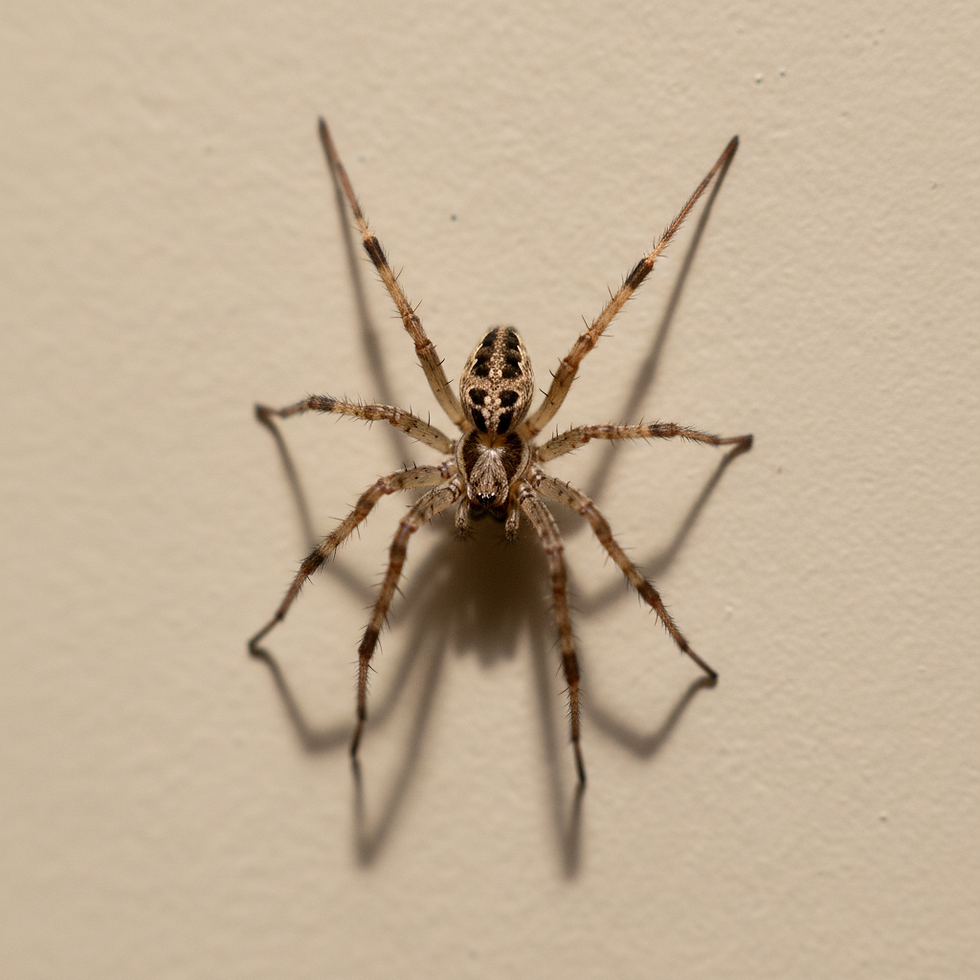
Common house spiders & cellar spiders - the everyday culprits behind webs in corners, basements, garages, and window frames. Harmless, but their webbing and egg sacs are a persistent nuisance.
-
Wolf spiders - large, fast, and alarming to find, since they hunt on the ground instead of building webs. They look far scarier than they are; a bite is possible but rare and no worse than a bee sting.
-
Yellow sac spiders - small, pale, and responsible for many of the minor spider bites people actually get indoors. The bite can sting and redden but is generally minor.
-
Black widow - present in Pennsylvania but uncommon, favoring undisturbed spots like woodpiles, sheds, crawlspaces, and garages. Its bite is medically significant and warrants a doctor, though bites are rare and the spider is not aggressive.


EARWIGS/PINCER BUGS

-
Here's the reassuring truth first: the vast majority of spiders in Lancaster County are harmless, and most are actually beneficial - they eat other pests. The concern is usually more about the nuisance of webs and the occasional bite than any real danger. The ones worth knowing:
Damages & Risks of Spiders:
What to Look For:
-
Webs in corners and quiet spots. The clearest sign - cobwebs in ceiling and wall corners, basements, garages, window frames, eaves, and around light fixtures. Different spiders build different webs: tidy geometric orb webs, messy tangled cobwebs, or funnel shaped webs in corners.
-
Egg sacs. Small round or teardrop silk balls tucked into webs and sheltered crevices. Each can hold dozens to hundreds of eggs, so finding them signals the population is set to grow.
-
The spiders themselves, especially in low traffic areas - basements, garages, storage rooms, closets, and behind furniture and stored boxes.
-
Shed skins and prey debris. Cast off skins and the drained husks of insects collected in or below webs point to an active, established spider.
-
An uptick in other bugs. Since spiders follow their food, a lot of spiders usually means a lot of other insects - so a spider surge is often a sign of a broader pest problem worth addressing at the source.
-
Where they concentrate. Undisturbed, sheltered spots are the hot zones - crawlspaces, under decks, around foundation edges, and anywhere clutter gives them cover.
Why DIY Doesn't Work:
-
Sprays mostly miss them. Spiders' long legs hold their bodies up off treated surfaces, so they pick up far less than crawling insects - which is why store-bought sprays disappoint.
-
Egg sacs survive. Clearing visible webs doesn't touch the egg sacs hidden in crevices, and each can hatch dozens more.
-
The food source stays. Spiders come for other insects - unless you address what's drawing them in, new ones keep replacing the ones you remove.
-
Lasting control means going after the whole picture - the spiders, their egg sacs, and the insects feeding them - not a surface spray that passes them by.
GENERAL PESTS FAQs
Why do I keep seeing bugs even after I clean and spray?
Most nuisance pests, centipedes, millipedes, pill bugs, earwigs, and even roaches, come indoors because of moisture and hidden entry points, not because of anything you did wrong. Store bought sprays kill the few you see but don't fix the damp conditions or seal the gaps drawing them in, so they keep coming back. Lasting control means treating the source and the entry points, which is exactly what we do. Contact us and we'll take care of it.
What are the most common household pests in Lancaster County?
The everyday nuisance pests we treat most are ants (odorous house ants, pavement ants, and others), spiders, cockroaches, silverfish, centipedes, millipedes, earwigs, pill bugs, and flies like fruit flies and house flies. Most are harmless but persistent, and many signal an underlying moisture or entry point issue. Whether it's a one time problem or year round protection, we handle the full range. Don't see your pest? Just ask.
Are these common pests dangerous?
Most household nuisance pests, like centipedes, millipedes, pill bugs, and earwigs, are harmless. They don't bite meaningfully, spread disease, or damage your home; their main impact is the "creep factor" of finding them indoors. Cockroaches and flies are the exceptions: they can spread bacteria and trigger allergies or asthma, so those are worth treating quickly. Either way, we can identify what you're dealing with and tell you exactly how concerned to be.
How do I get rid of ants for good?
The ants you see are just foragers; the queen and colony stay hidden, often in wall voids, under slabs, or in outdoor mulch, producing thousands more. Spraying the visible ants can actually make it worse, since our most common local ant splits into new nests when disturbed. Lasting control means identifying the exact species, locating the nest, and using targeted baits the ants carry back to the queen. That's the difference between a week of relief and an actual fix.
Why do I have spiders in my house?
Spiders follow their food, so a lot of spiders usually means a lot of other insects for them to hunt. The good news: the vast majority of spiders in Lancaster County are harmless and even beneficial. The concern is mostly the nuisance of webs and the occasional bite. Because spiders come for other pests, lasting control means addressing the whole picture, the spiders, their egg sacs, and the insects feeding them, not just a surface spray.
Do I need a one-time treatment or a recurring plan?
It depends on the problem. A one time treatment is great for knocking out a specific active issue. But because so many nuisance pests are seasonal and moisture driven, many homes do best on a quarterly plan that keeps them out year round and adjusts for each season. We'll help you decide what fits during your free inspection, with no pressure.